Teamwear Fabrics
Discuss knit, mesh, fleece-back and stretch options for jerseys, training tops, hoodies and activewear, plus rib, zips, thread and backing. Confirm fabric weight and composition at sample stage.
Fabrics, trims, decoration, labels
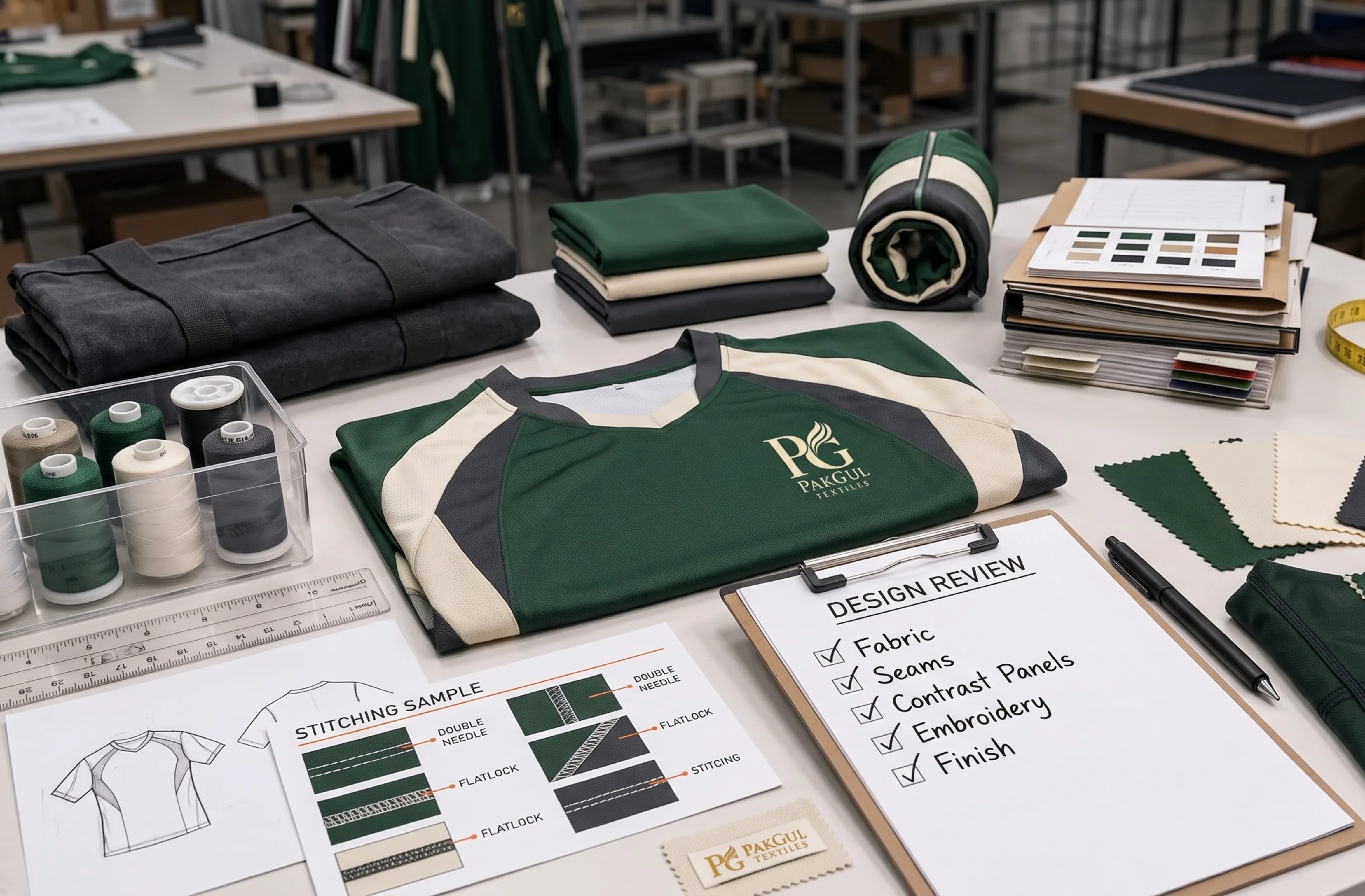
The right fabric depends on the garment and how it is used: a match jersey, a training top, a hoodie or a retail line. PakGul Textiles agrees fabric weight and composition with you on the sample, not from a name on a list.
Order planning
Discuss knit, mesh, fleece-back and stretch options for jerseys, training tops, hoodies and activewear, plus rib, zips, thread and backing. Confirm fabric weight and composition at sample stage.
Sublimation suits polyester jerseys with full-colour designs. Screen printing and heat transfers suit numbers and marks. Embroidery suits crests and logos on heavier garments.
Woven neck labels, care labels, hang tags and packaging are part of the material decision for private-label and retail orders, and are approved with the sample.
Start with the garment and how it will be worn. A soccer jersey needs a fabric that takes sublimation and handles sweat; a hoodie needs warmth and a surface that holds embroidery; activewear needs stretch and recovery. Tell us the use, the climate and how often the garment will be washed. Fabric weight and composition are then agreed on the sample rather than promised from a fabric name.
Test the decoration on the chosen fabric. Sublimation, screen printing, heat transfers and embroidery behave differently on stretch panels, seams and textured knits, so the sample is where you check colour, placement and feel. Record the approved fabric, trims and decoration against each design so a reorder uses the same specification.
Buyer Answer
PakGul Textiles makes custom teamwear in its own Sialkot factory and agrees materials per garment, not from a generic fabric list. Buyers can discuss knit and mesh fabrics, fleece, stretch fabrics, rib, zips, thread, woven labels, hang tags and packaging, plus sublimation, screen printing, heat transfers and embroidery. Fabric weight and composition are confirmed at the sample stage. Send the garment, use, decoration, quantity per design and destination to start.